16 / 24
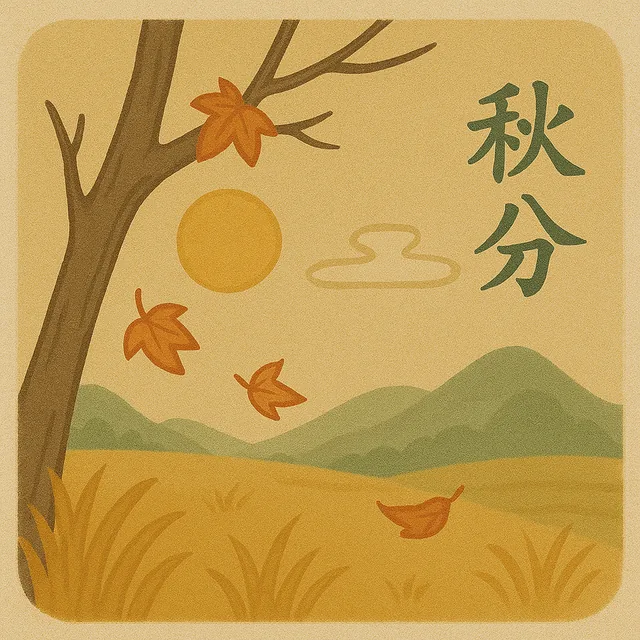
Autumnal Equinox
The autumn sky is clear; osmanthus scents the night.
Solar term date
Dates follow the Hong Kong Observatory’s calendar. They are civil dates, rather than precise astronomical times.
About this solar term
Autumnal Equinox begins at solar longitude 180°, as the Sun crosses the celestial equator southward. Day and night are approximately equal, with small differences caused by refraction and how sunrise and sunset are defined.
Traditional signs describe fading thunder, insects closing their shelters and lower water levels.
Northern Hemisphere nights continue to lengthen. Harvest celebrations and autumn foods give this astronomical turning point a rich cultural life.
Seasonal signs
Thunder fades, insects seal their shelters, and water levels fall.
Traditional seasonal signs combine observation with historical imagination. Weather and wildlife vary by region and year.
A reading of the poem
The qin sounds the season's note, and the wind already feels high and clear. Clouds scatter their drifting shadows; thunder quiets its angry voice. Heaven and earth grow still, and warmth and cold find a welcome balance. Newly arrived geese appear—how could the heart remain unmoved?
Tang dynasty · Traditionally attributed to Yuan Zhen
咏廿四气诗·秋分八月中
Poem source