17 / 24
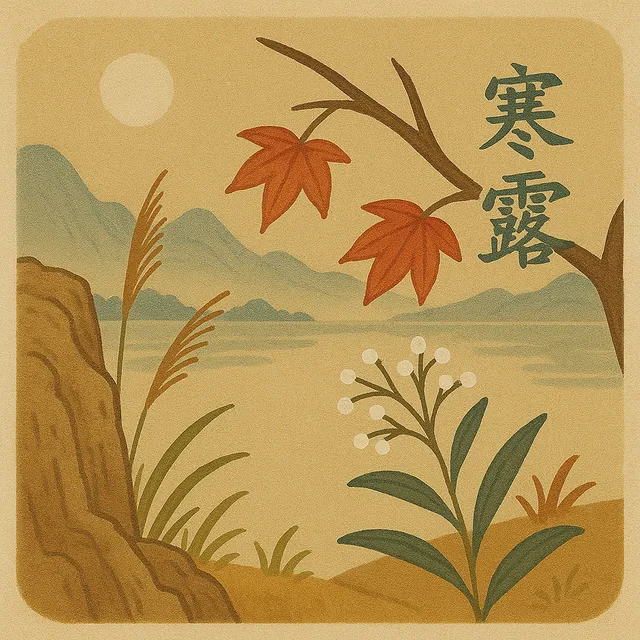
Cold Dew
A cool breeze softly stirs; cold dew falls in the stillness.
Solar term date
Dates follow the Hong Kong Observatory’s calendar. They are civil dates, rather than precise astronomical times.
About this solar term
Cold Dew begins at solar longitude 195°. It evokes the growing chill of autumn mornings, not a fixed temperature threshold.
Traditional signs include migrating geese and yellow chrysanthemums. The tale of sparrows entering the sea and becoming shellfish is historical lore, not biology.
In parts of China, the season invites hill walks, chrysanthemum viewing and persimmons. Conditions vary greatly between northern and southern regions.
Seasonal signs
Geese arrive and yellow chrysanthemums bloom; old lore tells of sparrows entering the sea.
Traditional seasonal signs combine observation with historical imagination. Weather and wildlife vary by region and year.
A reading of the poem
Cold Dew startles us with autumn's lateness; by morning the chrysanthemums are turning yellow. Wind sweeps leaves past countless homes as geese follow the Sun southward. Old tales of birds becoming shellfish mingle with fear of early frost on the fields. Pines and cypresses show their resolve by staying green through winter and summer.
Tang dynasty · Traditionally attributed to Yuan Zhen
咏廿四气诗·寒露九月节
Poem source