15 / 24
White Dew
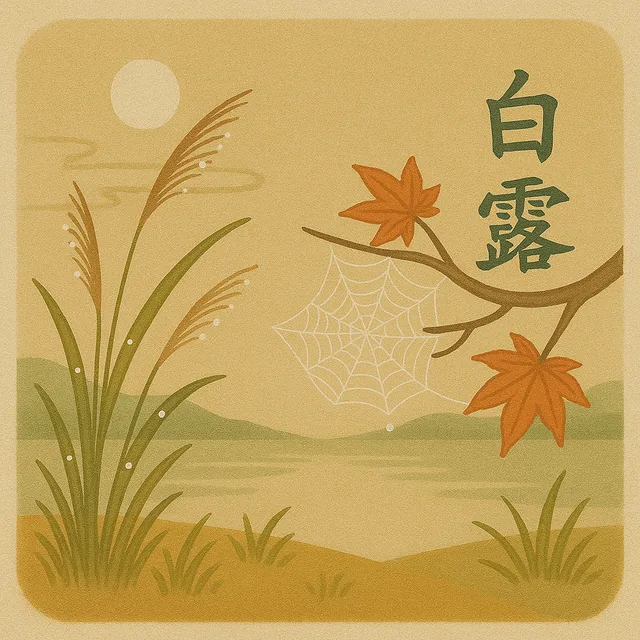
White dew gathers on the reeds; clear moonlight bathes the shore.
Solar term date
Dates follow the Hong Kong Observatory’s calendar. They are civil dates, rather than precise astronomical times.
About this solar term
White Dew begins at solar longitude 165°. The name evokes droplets visible on cool mornings. Dew forms when a surface cools enough for water vapor to condense.
Traditional signs describe migrating geese, departing swallows and birds preparing for colder weather. Migration patterns vary by species and place.
The term is associated with autumn tea and other regional foods. Its seasonal imagery reflects Chinese traditions rather than a worldwide change in weather.
Seasonal signs
Reeds stand thick in the dew—a poetic glimpse of deepening autumn.
Traditional seasonal signs combine observation with historical imagination. Weather and wildlife vary by region and year.
A reading of the poem
Dew whitens the garden plants beneath a high, clear sky. Leaves fall with autumn winds, bringing a sudden awareness of graying temples. Wild birds store food, and a traveler is struck by the overgrown landscape. Hurry to gather the crops, sparing no effort at dawn or dusk.
Tang dynasty · Traditionally attributed to Yuan Zhen
咏廿四气诗·白露八月节
Poem source