22 / 24
Winter Solstice
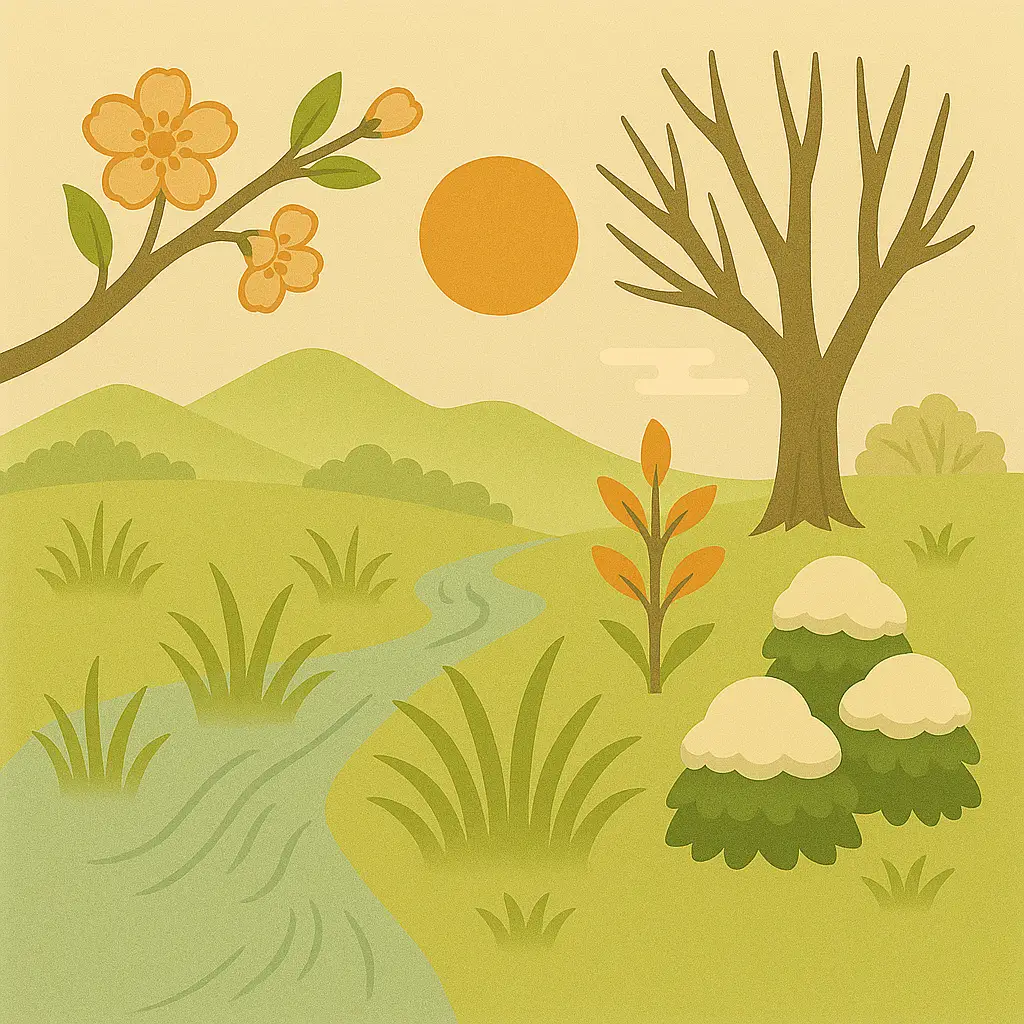
At the winter solstice, light begins to return—a hint of spring on a plum branch.
Solar term date
Dates follow the Hong Kong Observatory’s calendar. They are civil dates, rather than precise astronomical times.
About this solar term
Winter Solstice begins at solar longitude 270°, when the Sun reaches its southernmost declination. It brings the Northern Hemisphere's shortest daylight period, with polar night at high latitudes. The coldest weather often comes later.
Traditional signs describe curled earthworms, shedding antlers and stirring spring water.
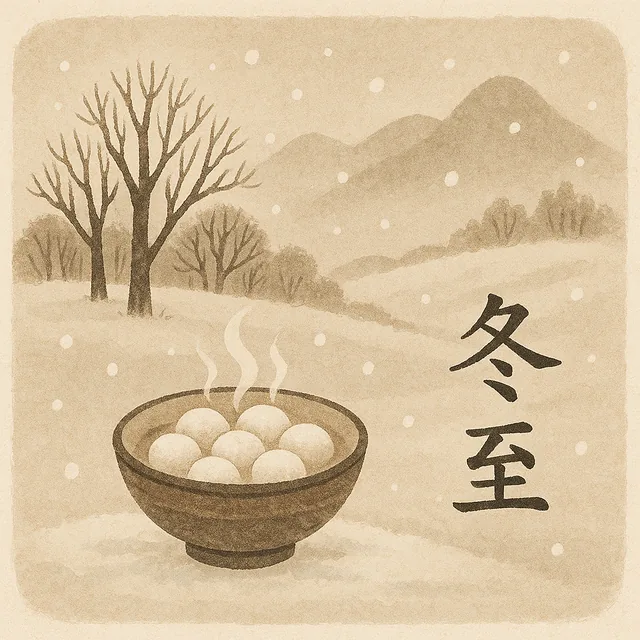
The solstice is an important occasion for family gatherings, dumplings or tangyuan in different regions. It also begins Shujiu, the traditional count of nine nine-day periods.
Seasonal signs
Earthworms curl up, deer shed antlers, and spring water stirs in the old seasonal calendar.
Traditional seasonal signs combine observation with historical imagination. Weather and wildlife vary by region and year.
A reading of the poem
At the turning of the seasonal forces, the Zhou calendar marks the beginning of a year. Stars look toward the northern sky while the Sun shines in the south. Congratulations are offered in golden halls and guests gather at splendid feasts. The poem imagines a well-governed realm at peace, with no wish to wage war at its borders.
Tang dynasty · Traditionally attributed to Yuan Zhen
咏廿四气诗·冬至十一月中
Poem source