04 / 24
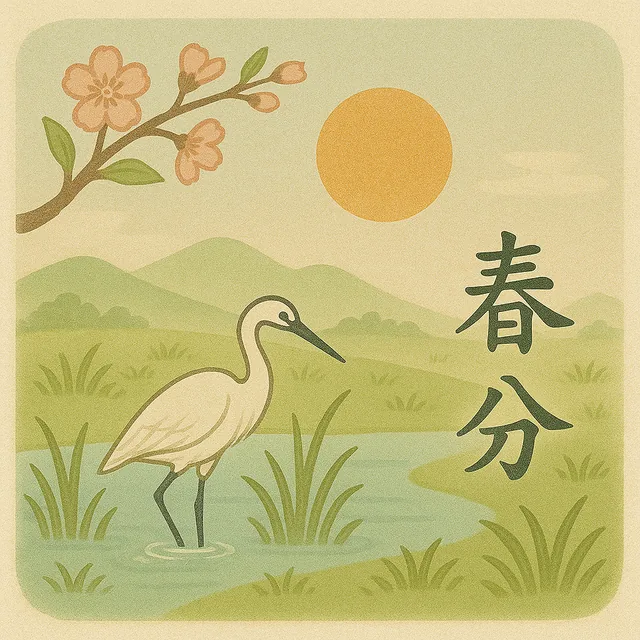
Vernal Equinox
Day and night draw even; swallows return to a city in bloom.
Solar term date
Dates follow the Hong Kong Observatory’s calendar. They are civil dates, rather than precise astronomical times.
About this solar term
Vernal Equinox begins at solar longitude 0°, when the Sun crosses the celestial equator northward. Day and night are approximately, not exactly, equal: atmospheric refraction and the Sun's visible disc affect sunrise and sunset.
Traditional signs include returning swallows and the first thunder and lightning of spring. Their timing varies locally.
In the Northern Hemisphere, daylight continues to lengthen. Customs associated with the term celebrate balance, new growth and the spring farming season.
Seasonal signs
Swallows return, thunder begins, and day and night draw nearly even.
Traditional seasonal signs combine observation with historical imagination. Weather and wildlife vary by region and year.
A reading of the poem
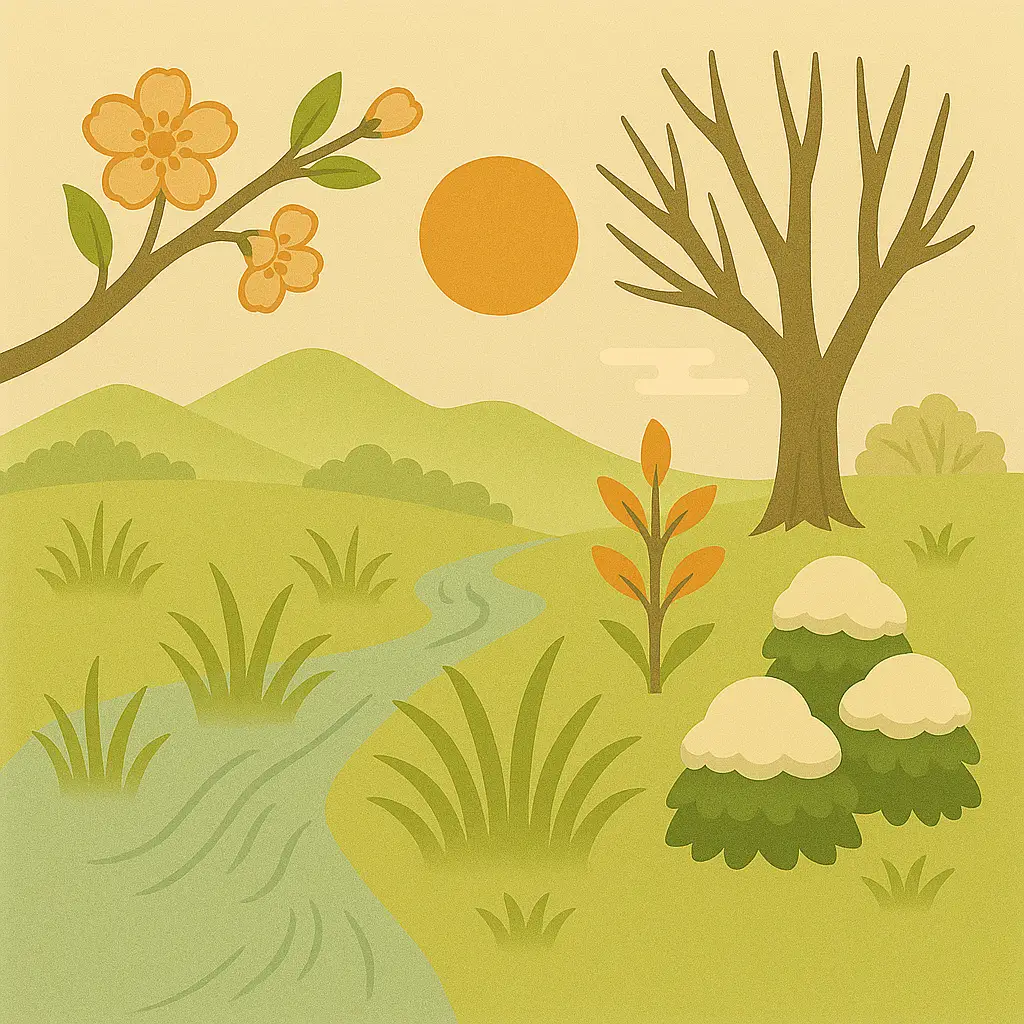
The two seasonal forces need not contend; equinox rain travels through the land. Lightning flashes with the rain, and thunder follows passing clouds. Green mountains meet the sky, flowers brighten in the sun, and swallows under the beams seem to understand human feeling.
Tang dynasty · Traditionally attributed to Yuan Zhen
咏廿四气诗·春分二月中
Poem source